Study of the Virgin from a larger painting.
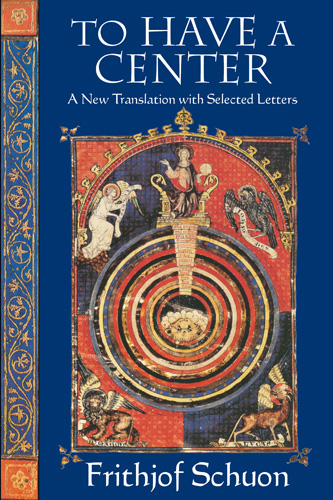
To Have a Center: A New Translation with Selected Letters
In this new edition of his powerfully original work, Schuon covers an array of metaphysical, cosmological, and anthropological subjects.



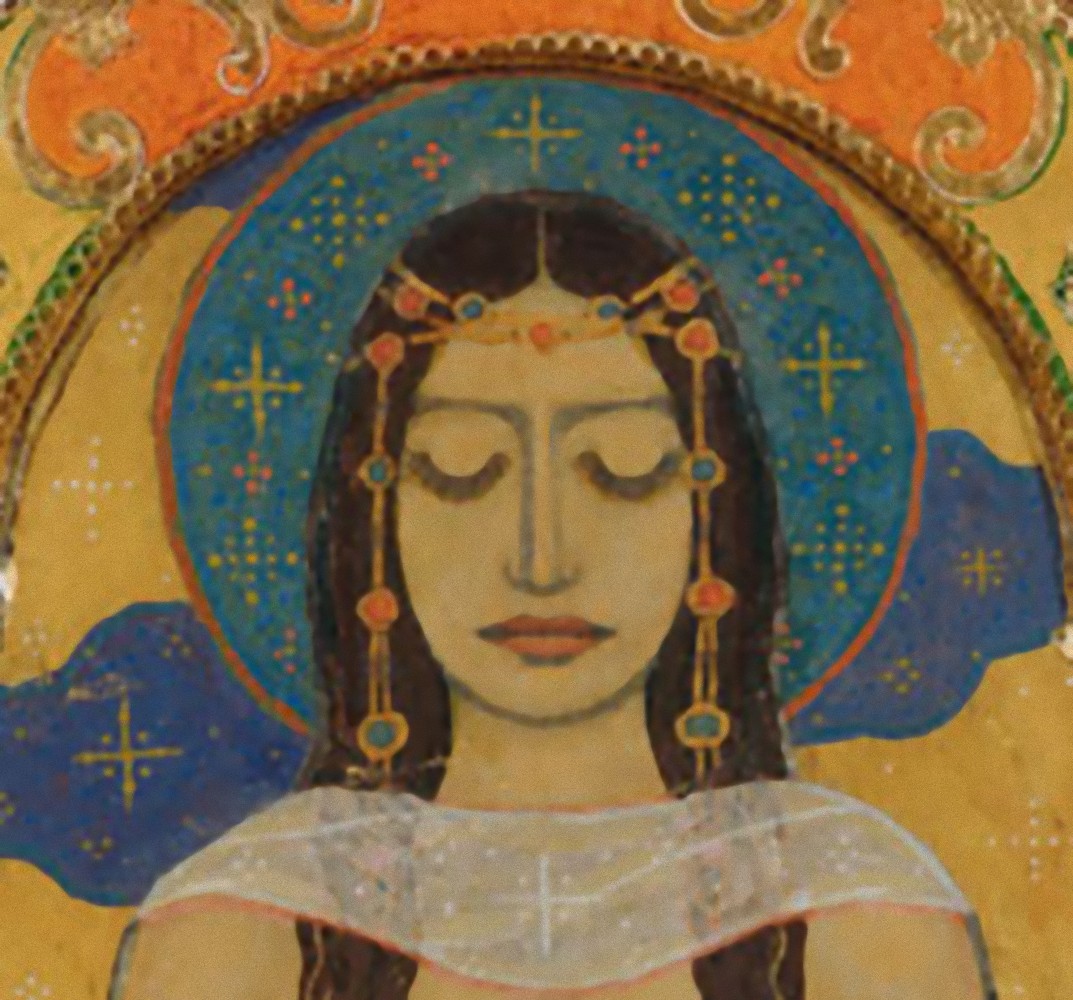
Study of the Virgin from a larger painting.
In this new edition of his powerfully original work, Schuon covers an array of metaphysical, cosmological, and anthropological subjects.
The book comes to an end, but not the singing;It lies in space and time and in all things,And yet is spaceless, timeless, beyond form —It is the content and radiance of our existence.The signs of God have their own speech;Thou hear’st it or thou hear’st it not.This...
The Bodhisattva’s graces, it is said,Extend much further than the spoken word —His body is the open house of his Enlightenment,Bestowing upon us its saving radiance.To give is more blessèd than to receive.Radiate, O Bodhisattva, what the heart desires.What thou hast...
Wise Solomon had temples builtTo foreign gods, for his belovèd wives;With loving sweetness Magdalene pouredSpikenard oil on Jesus’ feet.On Dante’s thorny path of lifeRavenna’s noble women were a grace.The eternal feminine I wish to praise —Woman’s solace is a favor...
This you must understand: I wish to feel ÂnandaIn all refreshing earthly things:A tree in bloom, a noble maiden,A love-song that delights the soul.And on the other hand: I wish to find refugeFrom all distractions of the mind;O blissful cessation of fleeting thoughts...
The theomorphic nature of man is a central theme in the oeuvre of Frithjof Schuon. Scott surveys Schuon’s key theomorphic teachings while touching upon the symbolism of the body and man in the wider context. Scott applies three categories within which he examines Schuon’s teachings on man’s theomorphic form (i.e. the body): (1) man’s divinity and animality, (2) the symbolism of the sexes, and (3) the meaning of sacred nudity.
Frithjof Schuon’s work can be viewed as explorations of and elaborations upon four essential realities: the “a doctrine of Truth or Reality, and a method of Integration or Realization through Prayer leading to inner beauty or Virtue, or outer goodness or Beauty.” Illustrations of Schuon’s thoughts on these is taken primarily from his didactic poems, adding the element of beauty of expression to the clarity of metaphyical exposition for which he was known.