

Frithjof Schuon Archive




















Featured Books
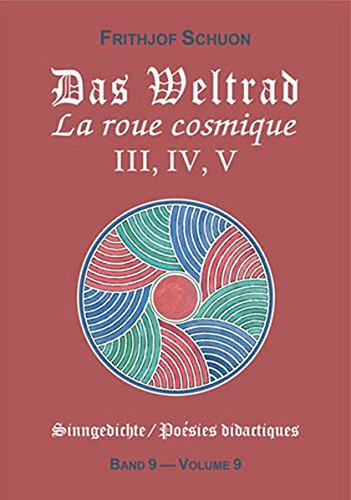
Das Weltrad 3, 4, 5
The German sense poems of Frithjof Schuon form a metaphysical and spiritual whole that unites the essential teachings of this master in a form as accessible as it is immediate.
Featured Poems
Adastra and Stella Maris: Poems by Frithjof Schuon-The Celebration
A worldly banquet: chandeliers glitter In the large hall — And brilliant society, ladies and gentlemen Sit down for the meal. They talk of everything and they talk of nothing — The wine is red, And so are the flowers. But no one, no one Thinks of death.
Adastra and Stella Maris: Poems by Frithjof Schuon-Contentment
To be content with God — these are weighty words.Do they mean that one should despise all things?This is hardly so. God created us to love us —But also for us to strive fervently toward the Sovereign Good.Within us shines a golden jewelAs soon as we remember That...
Adastra and Stella Maris: Poems by Frithjof Schuon-Upaya
There are two ways to draw you to the pathOf salvation, and to flee the Fall.Two sacred remedies: let me first namePlato and Shankara with their stern speech;Their teachings burn through foolish illusions —Then the sweet and magic flute of David and Krishna:To...
Adastra and Stella Maris: Poems by Frithjof Schuon-Trinitas
Spirit, Truth, Name — the three high marvelsIn which God wished to give Himself unto the world.Intellect, Doctrine, Sacrament —In their profundity thou shouldst immerse thyself,So that the meaning of thy nature be fulfilled.And may God guide the powers of thy mind...
Featured Articles
Frithjof Schuon et René Guénon
Un entretien avec Frithjof Schuon
À propos de « Trésors du Bouddhisme »
The Introduction by The Prince of Wales to the 2006 Sacred Web Conference
This is a transcript of The Prince of Wales’ videotaped introduction to the Sacred Web Conference, “Tradition in the Modern World,” presented on September 23, 2006, at the University of Alberta, Edmonton, Canada. Prince Charles begins his comments with: “In these uprooted times, there is a great need for constancy; a need for those who can rise above the clamour, the din and the sheer pace of our lives to help us to rediscover those truths that are immutable and eternal; a need for those who can speak of that eternal wisdom which is called the perennial philosophy.” The address continues to outline key points of Traditionalism and the Perennial Philosophy, supporting The Prince’s theme that there are real and positive applications of these points in “finding practical solutions to what, at first, seem to be impossible difficulties – and sometimes to speak for those whose voices are unheard amidst the clamour of Modernism.” The Prince’s insights demonstrate his thoughtful consideration of and interest in the worldview offered by the Perennial Philosophy.